Open the shed door on a still morning and look along the bottom shelf. A torn corner on a seed envelope, husks behind the pots, a hollow in the sack of bird food: these are the quiet signs that something has been sharing your store. Around Dallas, where long hot summers give way to mild, damp spells, sheds and garages suit mice and rats well. When the signs point to more than the odd visitor, a professional is the sensible call; for a local company's own description of rodent work, Learn More.
The trouble rarely stops at a few lost seeds. Gnawed bulbs, droppings near the potting bench and nests in folded fleece turn a tidy store into a job you put off. This note covers the gardener's side: how to read the shed, store seed safely and keep a food garden in mind while the problem is sorted.
Back of the packet
- Best time: late winter, before seed sowing begins
- Effort: a morning, plus a glance each week
- You'll need: lidded tins, gloves, a torch, a broom
- Watch for: droppings, gnawed edges, shredded paper or fabric
Read the shed before you tidy it
The first instinct is to sweep everything out. Wait a day. A shed tells you a lot if you look at it as it is, with a torch, before anything moves.
Walk the edges slowly. Rodents tend to travel along walls rather than across open floor, so the evidence collects at the base of the walls, behind stacked pots and under the bench. Look at:
- Droppings: where they gather, and whether they look fresh or old and dry
- Gnaw marks: on wooden edges, plastic lids and the corners of paper packets
- Nesting: shredded paper, fleece, twine or burlap pushed into a quiet corner
- Gaps: daylight under the door, around pipes, at the joins of the walls
- Food: bird seed, pet food, stored bulbs, dried beans saved for sowing
Make a short note of what you find and where. That note matters later, both for your own plan and for anyone you call in to help.
Decide what is yours to handle
A single nibbled packet in a shed you rarely open is a different matter from droppings across the bench and a nest in the fleece. Many gardeners find it helpful to set a simple line: if the signs are scattered and old, a careful clear-out and better storage may be enough. If they are fresh, widespread, or showing up in the garage or house as well, it is time to bring in a professional.
Dallas homes with gardens often share a few features that make this more likely: a shed against a fence line, a compost heap nearby, fruit dropping in late summer, and bird feeders that spill onto the ground. None of these are faults. They are simply worth mentioning when you describe the problem.
When you talk to a pest control company, the useful questions are the gardener's ones:
- What will be used, and where will it be placed?
- Is any of it safe near beds where you grow food to eat?
- How should pets and children be kept away, and for how long?
- What should you change in the garden to make the space less inviting?
Ask what is safe near edible plants before any treatment begins, and follow what they tell you. That conversation belongs with the professional, not with a guess.
Choose for the job
A few useful features to look for before buying.
Emboss-O-Tag metal labels, 50 pack
A set of 50 aluminum-faced labels that you indent with a ballpoint pen or pencil. Attach them to separate stakes or tray supports using the supplied ties; keep wire away from growing stems. Test one label for readability before marking the batch.
Read the buying checklist →Fiskars Ergo planting trowel
A cast-aluminum head and shaped handle for small planting holes and potting work. Check the grip in your hand if possible, and use a fork or spade for ground that needs prying.
Read the buying checklist →Clear the store with care
Once you have looked and decided, the clear-out itself is steady work. Pick a dry, calm day and keep the door open for air.
Wear gloves for the whole job, and avoid sweeping dry droppings into a cloud of dust. Local health guidance on cleaning up after rodents is worth reading before you start, because it explains how to dampen and lift material safely. Bag anything that has been chewed or soiled, and be honest about what to keep: a packet of seed with a gnawed corner has usually been picked over, and the cost of replacing it is small next to the worry of keeping it.
As you work, sort what stays into a few groups:
- Seeds and saved seed
- Bulbs and tubers being stored
- Bird and pet food
- Fabrics: fleece, netting, sacking
- Tools and pots
Grouping things this way makes the next step simple, because each group needs a different kind of home.
Store seed so it stays yours
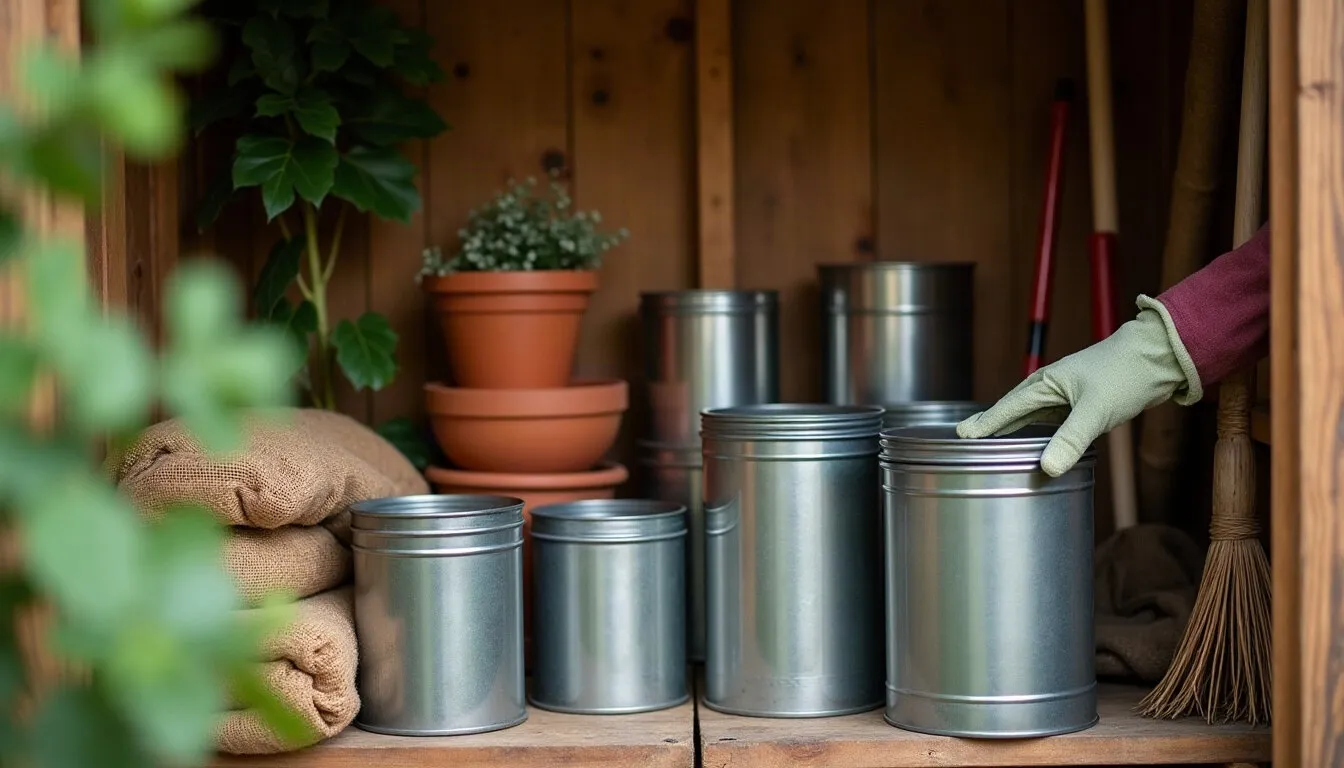
Paper packets, open boxes and cloth bags are an invitation. The aim is to put anything edible behind something hard and closed, and to lift it off the floor.
| Storage | Suits | Effort | Watch for |
|---|---|---|---|
| Metal tin with a tight lid | Seed packets, saved seed | Low | Condensation if kept somewhere damp |
| Glass jar with a screw lid | Small amounts of saved seed | Low | Breakage on a busy shelf |
| Lidded metal bin | Bird food, pet food | Low | Lids left half on |
| Shelf off the floor | Bulbs in mesh or paper | Medium | Air needs to move around them |
Keep seed cool and dry as well as closed. Around Dallas, a shed can get very hot in summer, which is hard on stored seed whatever the rodent situation. Many gardeners move the seed tin into a cool cupboard indoors for the hottest months and bring it back out for the sowing season.
Fabric is the other weak point. Fleece and sacking make a soft, ready nest. Fold them and keep them in a lidded box, or hang them from a hook rather than leaving them in a heap under the bench.
A tool for this part of the job
A few useful features to look for before buying.
Emboss-O-Tag metal labels, 50 pack
A set of 50 aluminum-faced labels that you indent with a ballpoint pen or pencil. Attach them to separate stakes or tray supports using the supplied ties; keep wire away from growing stems. Test one label for readability before marking the batch.
Read the buying checklist →Look at the garden around the shed
The shed is only part of the picture. Stand back from it and look at what surrounds it, because the habits of the garden can draw rodents in.
Spilled bird seed under a feeder is one of the most common sources of food. A tray under the feeder, or moving it away from the shed, can help, and so can sweeping up beneath it now and then. Fallen fruit in late summer is another, so gathering windfalls promptly is worth the effort.
Compost needs a little attention too. A well-managed heap with garden waste is less inviting than one with cooked food scraps in it. If your heap sits right against the shed wall, consider moving the next one a little further away.
Keep the strip along the shed wall clear. Long grass, stacked timber and piles of empty pots against the wall give cover. A clear edge also makes it easy to see fresh signs as you walk past.
Tend and check through the season
Once the store is clean and the problem has been dealt with, the work becomes a small weekly habit rather than a big job.
Open the shed with a torch now and then and glance along the bottom of the walls. Lift a lid or two to check nothing has been disturbed. Look at the base of the door and the joins of the walls for new gaps, especially after a storm or a dry spell when timber can shift.
Watch the garden as well. Freshly sown seed disappearing from a bed, nibbled bulbs, or new holes along a fence line are all worth noting. Many gardeners find that watching for a few weeks, and writing down what they see, gives a clearer picture than reacting to the first sign. If the signs return in force, go back to the professional you spoke to and tell them what you have noticed and where.
Keep products used by a professional out of reach of children and pets, and away from anything you will eat, for as long as you have been told to. When in doubt, ask them again.
For the garden book
Write down where you found signs this year, what you changed in storage, and when you moved the seed tin indoors and back out again. Note any advice the professional gave about treating near your vegetable beds, so it is to hand next time. A few lines now will make next winter's shed check quicker and calmer.
A shed with closed tins, clear edges and nothing left lying on the floor is a quieter place to start the sowing season.
Before you choose
A few useful features to look for before buying.
Emboss-O-Tag metal labels, 50 pack
A set of 50 aluminum-faced labels that you indent with a ballpoint pen or pencil. Attach them to separate stakes or tray supports using the supplied ties; keep wire away from growing stems. Test one label for readability before marking the batch.
Read the buying checklist →