The car is packed by eight, the cool box is full, and the last thing anyone remembers is the row of pots on the patio. In a Florida summer, a single long day away can be enough for a container of basil to collapse and a tray of seedlings to dry out. So, before the family heads off for a day at a Fellsmere FL surf park, what does the garden actually need?
Less than you might fear, provided the jobs are done in the right order and a few days ahead. This note sets out a short sequence for the week before a day or a weekend away, so the garden is still in good shape when you return, sandy and tired.
Back of the packet
- Best time: the week before a summer day away
- Effort: two short sessions, then a morning check
- You'll need: a watering can, mulch, saucers, a shady corner
- Watch for: pots in full sun, seedlings, new transplants
Take stock of the garden a week ahead
The first step is simply to look. Walk the garden a week before the trip with a notebook and sort what you see into three groups.
- Tough and settled: established shrubs, mature beds, plants in the ground for a season or more
- Thirsty but movable: pots, hanging baskets, herbs on the patio
- Fragile: seedlings, new transplants, anything sown in the last few weeks
The first group will almost always manage a day without you. The second and third need a plan. In a hot, humid climate the sun and the afternoon heat do more damage than the lack of water itself, so note which pots sit in full sun and which already have some shade.
Look at the forecast too, but treat it as a guide only. Summer storms in Florida can bring heavy rain in the afternoon and still leave pots under eaves bone dry.
Finally, look at the edible crops. Tomatoes, peppers and cucumbers in the ground may have fruit close to ripe. Picking anything that is ready the day before you leave is better than coming home to split or overripe fruit, and a few hours in the fridge will not spoil a ripe tomato as quickly as a long hot day on the vine might.
Plan the jobs in order
Once you know what you have, set out the sequence. A useful habit is to separate "this week" from "the night before" and "the morning you leave", because each job works best at a particular point.
This week:
- Decide which pots will move into shade and where they will go
- Top up mulch on beds and large containers
- Hold off on sowing or transplanting anything new until you return
The night before:
- Move pots and baskets into their shady spot
- Group them together and stand them in saucers
- Give everything a long, slow watering
The morning you leave:
- A final check of the most fragile plants
- A short top-up of water for anything that looks dry
- Close the shed and put the hose away
Writing this down might seem unnecessary for a single day out, but a list on the fridge means the jobs get done even when everyone is in a hurry.
Choose for the job
A few useful features to look for before buying.
Emboss-O-Tag metal labels, 50 pack
A set of 50 aluminum-faced labels that you indent with a ballpoint pen or pencil. Attach them to separate stakes or tray supports using the supplied ties; keep wire away from growing stems. Test one label for readability before marking the batch.
Read the buying checklist →Fiskars Ergo planting trowel
A cast-aluminum head and shaped handle for small planting holes and potting work. Check the grip in your hand if possible, and use a fork or spade for ground that needs prying.
Read the buying checklist →Prepare beds and pots to hold water
Most of the work is about helping the soil hold water for longer. A layer of mulch on beds and large pots slows evaporation and keeps roots cooler. Use what you have to hand: shredded leaves, straw or bark chippings all help. Keep mulch a little away from the stems of plants.
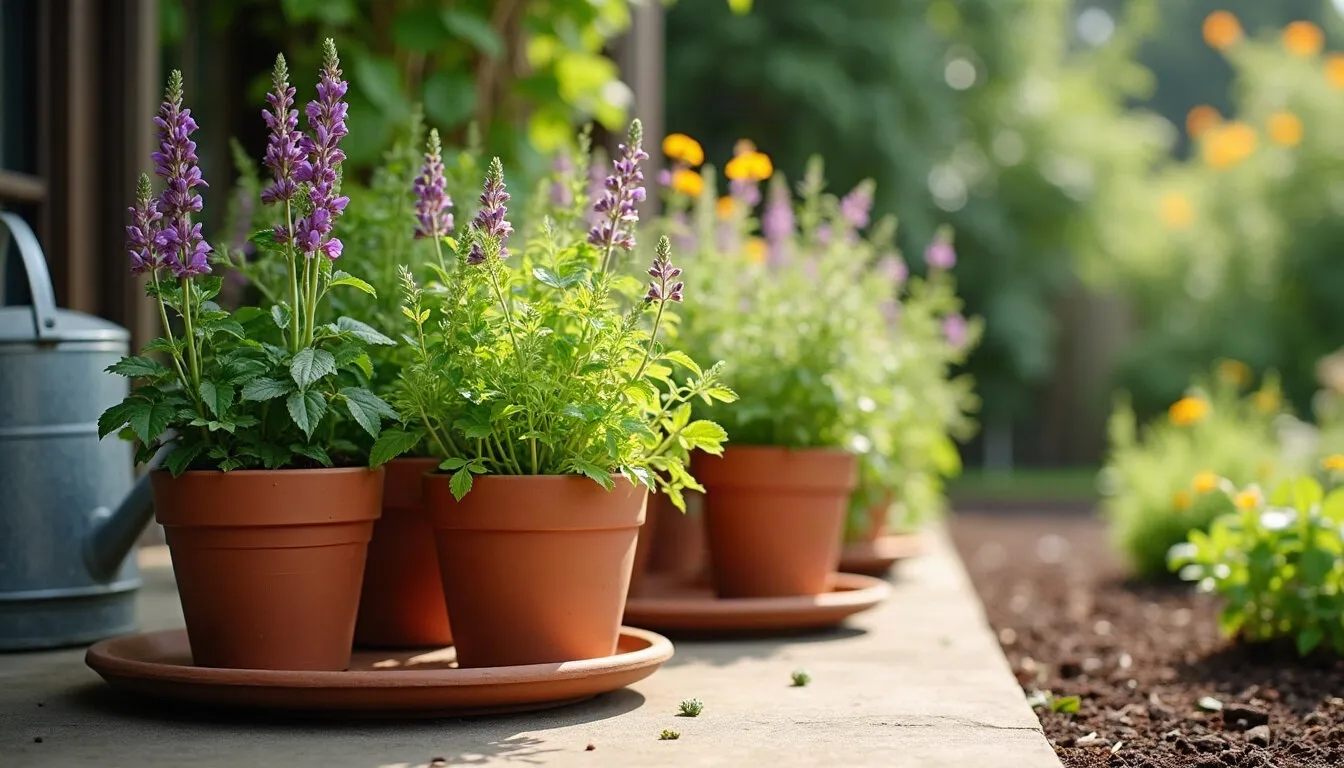
Pots dry out far faster than beds. Moving them out of the sun is the single most useful step. A corner on the north side of the house, under a tree, or beneath a covered porch can make a real difference. Group pots closely together so they shade one another and share a little humidity.
Saucers help too, but use them with care. In hot, humid weather a saucer left full for days can encourage mosquitoes and waterlogged roots. For a day or a weekend they are useful; empty them when you return.
For very fragile plants, such as a tray of seedlings, a cooler indoor spot near a bright window may be safer than outside for a day. Water them first and check they will not be in direct sun through the glass.
Water deeply the evening before
How you water matters as much as when. A quick splash wets the surface but does little for the roots. A slow, deep watering in the evening lets moisture soak down and gives plants the night to take it up before the heat of the next day.
Water each pot until it runs out of the bottom, wait a few minutes, then water again. For beds, water at the base of plants rather than over the leaves, and give each section a good soak rather than a light pass over everything.
If you have a drip line or a timer, check it the evening before. Run it once while you watch, look for leaks or blocked emitters, and make sure it covers the pots you have moved. Do not rely on it for the first time on the day you leave.
The evening is also the moment to look at anything in hanging baskets. Baskets dry fastest of all because air reaches them from every side. Take them down and set them on the ground in the shade with the other pots; they are much easier to water there and lose far less moisture overnight.
A tool for this part of the job
A few useful features to look for before buying.
Emboss-O-Tag metal labels, 50 pack
A set of 50 aluminum-faced labels that you indent with a ballpoint pen or pencil. Attach them to separate stakes or tray supports using the supplied ties; keep wire away from growing stems. Test one label for readability before marking the batch.
Read the buying checklist →Tend and check when you return
Coming home from a long day in the sun, it is tempting to leave the garden until morning. A quick evening look is worth the effort.
Walk round with the watering can and check:
- Pots that have dried out, especially small ones
- Seedlings or transplants that are wilting
- Saucers holding standing water
- Beds where storm rain has run off rather than soaked in
Water anything dry, empty saucers, and leave pots in their shady spot for another day or two before moving them back. Plants that wilted in the heat often recover overnight once watered; give them time before deciding they are lost.
Over the following week, watch the garden for any signs of stress: yellowing, scorched edges, or plants that do not recover. These tell you which spots were too exposed and which pots need a better summer home.
This is also a good time to restart anything you paused. Sowings and transplants that you held back the week before can go in now, once the plants already in the garden have recovered and you know they are settled. Later in the season, the same short routine will serve again for the next day away.
Arrange help for longer trips
A day out is one thing. A long weekend or more in the height of summer needs a little more planning. If you are away for several days, consider asking a neighbour to water the pots once or twice. Leave them a short note: which pots, where the hose or watering can is, and which plants matter most.
Make it easy for them. Group everything that needs water in one place, and leave a full watering can by the door. A neighbour is far more likely to help if the job takes ten minutes rather than an hour.
For gardeners who travel often in summer, it may be worth rethinking the pots themselves. Larger containers hold water longer than small ones, and grouping plants in a few big pots rather than many small ones makes the garden easier to leave.
For the garden book
Note which pots dried out first, which shady spots worked, and how long the garden managed without you. If you used a timer or asked a neighbour for help, write down what worked. Next summer, the week before a day away will be quicker and calmer.
A garden that is ready to be left is one you can enjoy coming home to.
Before you choose
A few useful features to look for before buying.
Emboss-O-Tag metal labels, 50 pack
A set of 50 aluminum-faced labels that you indent with a ballpoint pen or pencil. Attach them to separate stakes or tray supports using the supplied ties; keep wire away from growing stems. Test one label for readability before marking the batch.
Read the buying checklist →