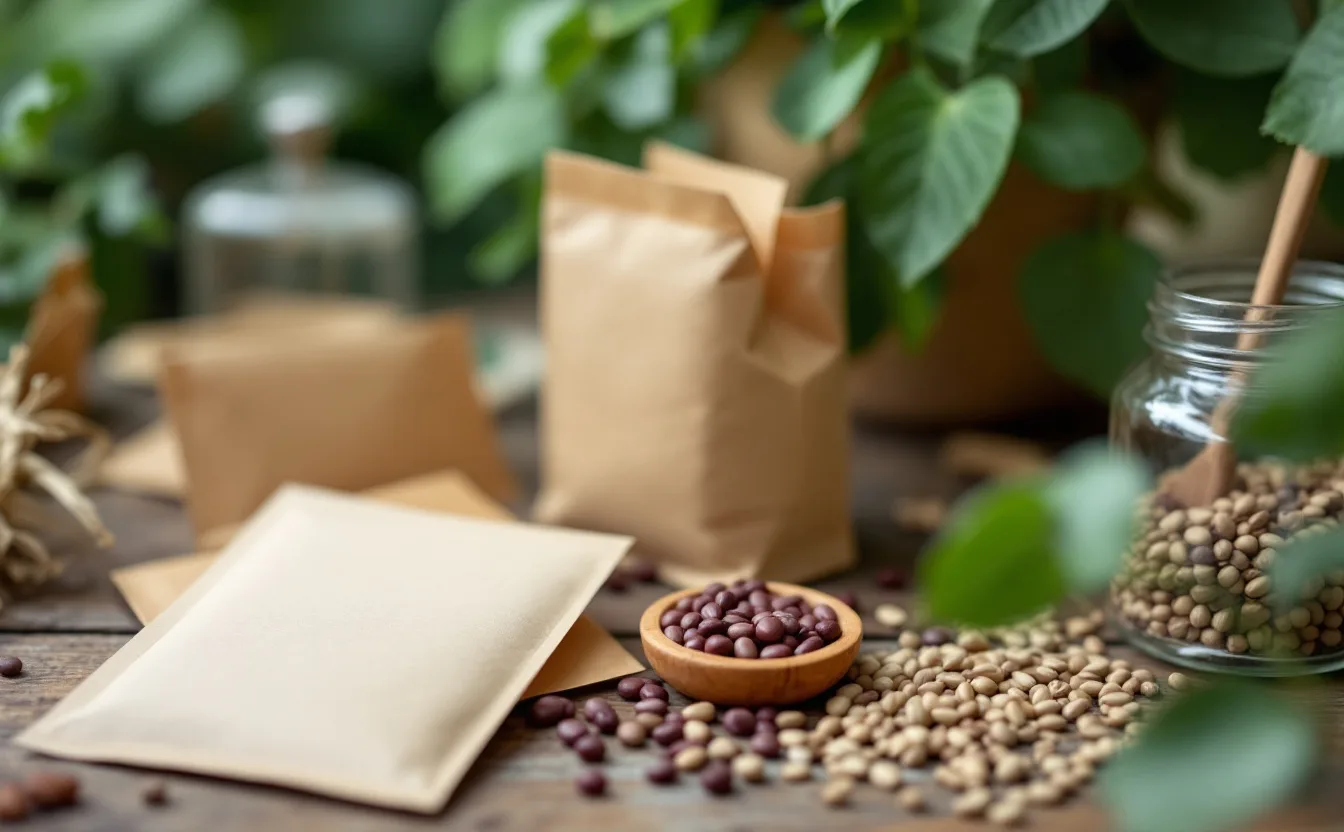

A seed packet is a small document carrying several kinds of information. Some lines identify the seed, some describe the plant and others suggest how to grow it. Reading them as separate parts helps prevent a colourful photograph from becoming the whole plan.
Before opening the packet, find the crop and variety name, supplier, date or lot information and the growing instructions. Keep the packet until the season is finished. It is a reference you may need when seedlings look alike or the harvest differs from what you expected.
Identity comes first
The common crop name tells you the broad subject, but the variety name can explain the particular growth habit or harvest purpose. A compact tomato and a tall climbing tomato may share a picture of red fruit while needing very different space and support. Copy the exact variety spelling into the notebook.
A botanical name can help distinguish plants with confusing common names. It is especially useful for unusual species, but it does not identify an unknown plant by itself. The name printed on a packet should describe the material supplied, and a reputable supplier should be able to answer questions about it.
Do not discard lot information when transferring seed to another container. If a question arises, the supplier may need that reference. A handwritten label that says only “tomato” preserves far less information than the original envelope.
Separate sowing from planting out
Packets may show an indoor sowing period, an outdoor sowing period and a transplanting period. Those are different operations. A month marked for indoor sowing is not automatically a safe month to put a tender seedling into the garden.
Calendar illustrations are usually intended for a particular market or broad climate. Check whether they fit your region and site. A sheltered urban plot and an exposed upland garden may need different timing even when they are in the same country.
Use local advice and conditions to interpret the calendar. Our seed planner works backwards from a frost estimate for selected crops, but it cannot override the packet's species-specific requirements or predict an unusual cold spell.
Choose for the job
A few useful features to look for before buying.
Homtable 100 kraft seed envelopes
A pack of 100 small kraft envelopes for identified, fully dry seed. Each is 2.25 by 3.5 inches with a water-activated gummed flap, not a peel-off seal. Write the variety, source and year before filling; keep the packets in suitable dry storage.
Read the buying checklist →Emboss-O-Tag metal labels, 50 pack
A set of 50 aluminum-faced labels that you indent with a ballpoint pen or pencil. Attach them to separate stakes or tray supports using the supplied ties; keep wire away from growing stems. Test one label for readability before marking the batch.
Read the buying checklist →Ask what maturity starts from
A number of days to maturity can begin at sowing, transplanting or another defined stage. It can also refer to a particular harvest stage. Green peppers and fully coloured peppers do not necessarily reach the intended endpoint at the same time.
Look for the definition in the supplier's catalogue or instructions. If it is absent and important to your plan, ask. Comparing two numbers without their definitions can make a slower crop appear faster merely because the suppliers measured different intervals.
Treat the figure as guidance from stated conditions, not a countdown clock. Weather, light, plant health and management influence development. Record your own dates so the packet becomes a starting hypothesis that you can refine rather than a promise the garden must fulfill.
Read the mature spacing
The spacing between seeds in a tray may differ from the final spacing between plants. A dense sowing intended for later thinning is not a recommendation to leave every seedling in place. Likewise, a baby-leaf crop and a mature head crop may use different arrangements.
Draw the final plants in the available bed or container. Include the support and access space, not only the root position. This often reduces the number of seeds you need to start, which makes indoor care easier.
If the packet gives several methods, choose one deliberately. Mixing the sowing density from one method with the harvest expectation from another is a common way to create crowding. The small-sowing salad guide explains that distinction for leafy crops.
A tool for this part of the job
A few useful features to look for before buying.
Homtable 100 kraft seed envelopes
A pack of 100 small kraft envelopes for identified, fully dry seed. Each is 2.25 by 3.5 inches with a water-activated gummed flap, not a peel-off seal. Write the variety, source and year before filling; keep the packets in suitable dry storage.
Read the buying checklist →Do not turn a general depth rule into a law
Seed depth depends on the crop. Some seeds need covering, others need light or very shallow placement, and some require special preparation. The packet's specific instructions are more useful than a remembered rule that every seed should be buried twice its width.
Prepare the medium before sowing so you can follow the depth consistently. Fine seed on a rough surface can disappear into gaps or collect in clumps. A gentle watering method helps keep the seed where you intended it to be.
If the instructions are unclear, consult a reliable propagation reference for the confirmed species. Do not experiment with an unfamiliar plant solely because its seed resembles a familiar vegetable. Shape alone does not establish germination requirements.
Understand the type of seed claim
Open-pollinated, hybrid and organic describe different things. Open-pollinated relates to the breeding and reproduction context; an F1 hybrid is a particular first-generation cross. Organic certification concerns a defined production standard under the relevant scheme, not a guarantee of better germination or flavour in every garden.
Saving seed from a hybrid does not reliably recreate the original combination of traits. Open-pollinated crops can still cross with compatible neighbours. If seed saving is part of the plan, learn the crop's pollination biology rather than relying on a single label.
Preserve certification and treatment information as supplied. Do not repackage a packet in a way that removes handling warnings. Treated seed is not food, and labels should make its status clear to anyone who might encounter it.
Read resistance wording carefully
A variety may be described as resistant or tolerant to a named disease or strain. That is more specific than being “disease-proof”. Check the exact wording and the conditions behind it. Resistance to one problem does not cover every symptom the plant might develop.
Do not transfer a resistance list from a similarly named variety. Numbers, suffixes and strain names can matter. The Marketmore 97 reference illustrates why an old variety-shaped URL cannot justify borrowing claims from another selection.
Continue ordinary inspection and good growing practice even when a variety has useful resistance. A plant's label does not remove the need to identify a problem. If symptoms appear, record the conditions and seek a suitable diagnosis before choosing a treatment.
Translate the packet into a short plan
Write one line for the intended number of mature plants, one for the sowing window and one for the destination. Add a reminder for any intermediate step, such as thinning or potting on. This is enough to make the packet actionable without building an elaborate spreadsheet.
For a crop with uncertain germination, decide whether to test a sample or allow a modest surplus. Do not sow the whole packet automatically. Space after germination is often the real limit, particularly when seedlings need larger pots before planting out.
Use the seed-starting workflow to connect the instructions with light, containers and watering. Equipment should follow the plan. Buying a large tray first can create pressure to grow more plants than the garden needs.
Keep the result beside the instructions
At harvest, compare the useful outcome with the original description. Note actual dates, plant habit and the stage you enjoyed eating. Keep observations specific: one plant in one corner is not a universal variety trial.
If something seems seriously inconsistent, preserve the packet and contact the supplier with clear details. Avoid assuming every difference is mislabeled seed; weather, pollination, growing method and interpretation can also matter. Equally, a packet description should not be treated as infallible when good evidence suggests a problem.
The next season's plan becomes easier when the original instructions and your observations remain together. A packet is most valuable as the beginning of a record, not as packaging thrown away the moment the seed reaches the soil.
Further reading
University of Minnesota Extension's indoor seed-starting guide and University of Missouri Extension's propagation guidance provide background for interpreting sowing instructions. Use the current supplier's crop-specific information and regional advice for the final decision.
Keep the packet with the first sowing record until emergence is complete. If the label and notebook disagree, resolve the difference while the original instructions are still available.
Before you choose
A few useful features to look for before buying.
Homtable 100 kraft seed envelopes
A pack of 100 small kraft envelopes for identified, fully dry seed. Each is 2.25 by 3.5 inches with a water-activated gummed flap, not a peel-off seal. Write the variety, source and year before filling; keep the packets in suitable dry storage.
Read the buying checklist →