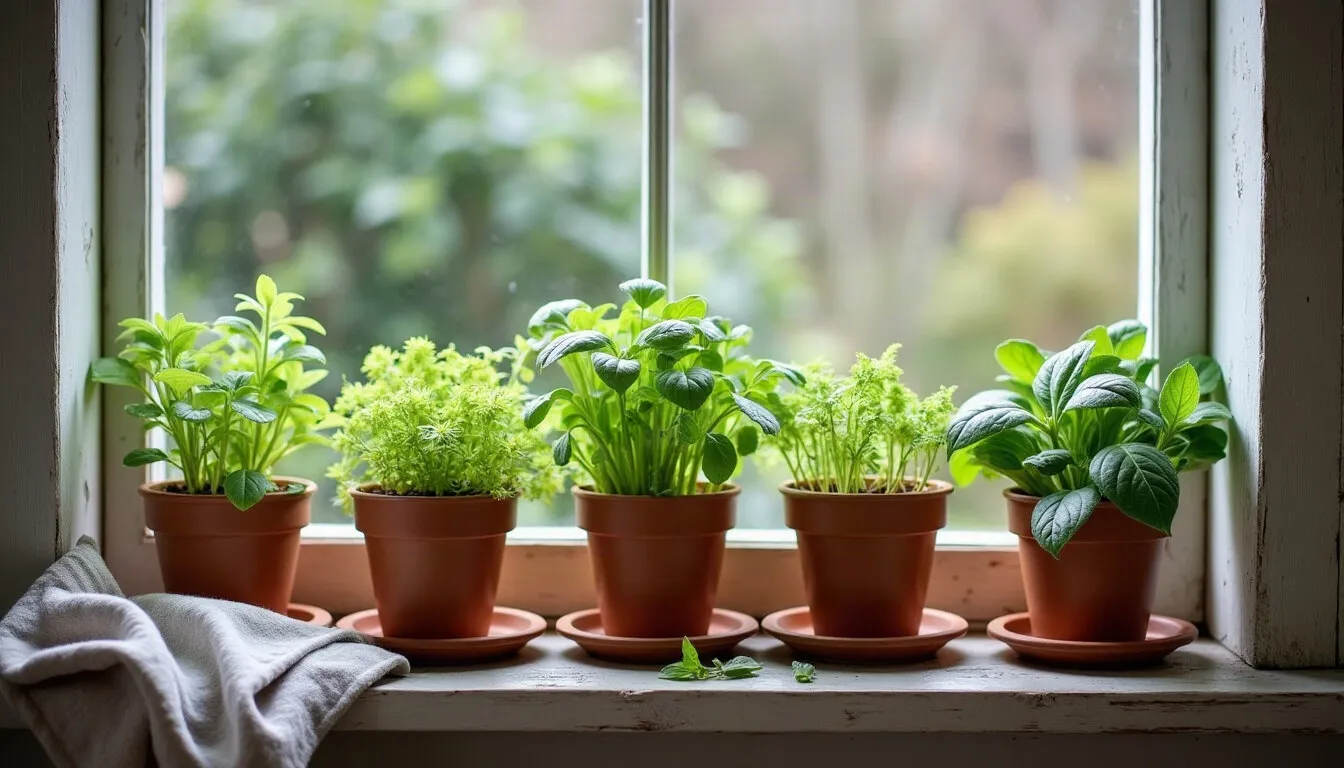
Look at a row of pots on a winter windowsill first thing in the morning. The leaves nearest the glass are often limp or marked, the soil stays wet for days, and there is a thin bead of water along the bottom of the frame. A sill can be the best growing spot in the house or the worst, and the window itself decides a good part of that. If you're researching replacement windows Lexington KY, it helps to know first what your sills are telling you.
Most of what follows is about the plants, though. Where winters bring hard frosts and summers turn humid, a sill swings between cold, damp and hot over the year. This note helps you read your windows, plan around them, and know when the glass itself needs a professional's eye.
Back of the packet
- Best time: early winter, before indoor sowing starts
- Effort: an hour of watching, then small weekly checks
- You'll need: a notebook, saucers, a soft cloth
- Watch for: condensation, cold draughts, scorched or yellowing leaves
Watch each window for a week
Before moving a single pot, spend a week simply noticing. Each window in a house behaves differently, and the differences are easy to miss until you look for them.
Visit the sills at a few times of day: early morning, midday and after dark. Rest the back of your hand near the glass and along the frame. Look at the inside of the pane and the bottom rail. A few things to note for each window:
- Which way it faces, and roughly when the sun reaches it
- Cold spots: a chill near the frame, or air moving at the edges
- Moisture: fogging between panes, drips on the sill, damp paint
- Heat: sills that get hot in the afternoon or sit above a radiator or vent
- Room use: a kitchen with steam, a quiet spare room, a busy hallway
Many gardeners find that the window they assumed was best turns out to be draughty, while a smaller window in a quieter room is steadier. A week of notes saves a season of disappointment.
It also helps to watch the weather while you watch the windows. A sill on a still, frosty night behaves differently from the same sill on a windy, wet one. If you can, take your notes across a cold snap and a milder spell, so you see each window at its worst as well as its best.
Plan the sill around what you found
Once you know your windows, match plants to them rather than the other way round. A south- or west-facing sill suits herbs and sun-lovers but may be too hot in summer. An east-facing sill tends to be gentler for seedlings and leafy greens. North-facing windows are best kept for plants that take shade, or for resting pots over winter.
Think about the whole year, not just the sowing season. In a Kentucky winter, a sill can be colder than the room behind it, especially at night. In summer, the same sill can bake. A plan that moves a few pots from one window to another as the seasons turn is often simpler than forcing one spot to suit everything.
| Window | Suits | Effort | Watch for |
|---|---|---|---|
| Sunny, warm | Herbs, chillies, pelargoniums | Low | Scorch and fast drying in summer |
| Bright, gentle | Seedlings, salad leaves | Low | Stretching toward the glass |
| Shaded, cool | Resting pots, ferns | Low | Wet soil that never dries |
| Draughty or damp | Very little | High | Cold damage, mould on the frame |
The last row matters. If a window is draughty, fogged between the panes or wet along the frame every morning, the honest answer may be that the window, not the plant list, needs attention.
Choose for the job
A few useful features to look for before buying.
VIVOSUN five-gallon fabric pots, five pack
Five nominal five-gallon fabric pots with handles for a small container garden. Match the crop to the available root space and allow for frequent moisture checks in warm weather. Place the bags where drainage will not damage the surface, and support the base when moving a filled pot.
Read the buying checklist →Fiskars 40 oz watering can
A small 40 oz (1.2 L) can for reaching under leaves or filling bottom-watering trays. Its long, narrow spout has no spray rose. For tender seedlings, pour into the catch tray rather than directing the stream at stems. Leave filling room at the top, and expect refills when watering larger containers.
Read the buying checklist →Prepare the sill and the window
A little preparation makes any sill kinder to plants. Wipe the glass inside so more daylight gets through. Clear the sill so air can move around the pots. Put a saucer under every pot, so watering never runs onto the frame or the wall below.
Look at the window as part of the house too. Peeling paint along the bottom rail, soft wood, or a sill that stays damp all winter are signs of trouble that a houseplant will not fix. A window that won't close snugly, glass that fogs between panes, or a frame that lets in cold air are all worth having a professional look at.
When you talk to a contractor about windows, it helps to bring the gardener's notes:
- Which rooms you grow in, and which windows you rely on most
- Where you noticed draughts, condensation or damp
- Whether you open the window for air in spring and summer
- How the sill is used: a deep sill for pots, or a shallow one
A good contractor will look at the frame, the glass and the opening, explain what they see, and talk through options. Decisions about the window itself are theirs to advise on.
Arrange pots for air and access
With the sill ready, place the plants. Leave a hand's width between the leaves and the glass where you can, especially in winter, so foliage does not touch cold panes. Group pots loosely so air moves between them; a tight cluster stays damp and invites mould.
Think about the leaves as well as the pots. Herbs with soft foliage, such as basil, mark quickly where they touch cold glass, while tougher plants like rosemary or thyme shrug it off more easily. Put the most tender plants in the middle of the sill rather than at the coldest end.
Keep the arrangement easy to reach. You will be turning pots, checking soil and wiping saucers, and a sill crowded with tall plants at the front makes that a chore. Put the shortest pots at the front, the taller ones behind, and leave a gap at one end for the watering can.
On sills above a radiator or heating vent, consider a shelf or a stand that lifts pots slightly away from the rising heat. Drying air from below can stress seedlings in the same way that cold glass can.
A tool for this part of the job
A few useful features to look for before buying.
VIVOSUN five-gallon fabric pots, five pack
Five nominal five-gallon fabric pots with handles for a small container garden. Match the crop to the available root space and allow for frequent moisture checks in warm weather. Place the bags where drainage will not damage the surface, and support the base when moving a filled pot.
Read the buying checklist →Tend the sill through the turning year
A windowsill garden is a small routine rather than a big job. Turn each pot a quarter turn every few days so stems grow straight rather than leaning toward the glass. Check the soil with a fingertip before watering; sills near cold glass stay wet longer than you expect.
Watch for the early signs that a window is not suiting a plant:
- Leaves pressed against the glass turning dark or translucent
- Yellowing lower leaves and soil that never dries
- Pale, stretched seedlings reaching for the pane
- Crisp brown edges on the sunniest sills in summer
Each of these points back to something you can change: distance from the glass, watering, a move to another window, or a closer look at the window itself.
Through the humid months, open windows in the morning for a little fresh air where you can, and keep an eye on condensation when the weather turns cold again. If the same window is wet every winter morning, mention it the next time someone looks at the house.
Spring brings its own check. As the days lengthen, seedlings that sat happily all winter may suddenly dry out faster or lean hard toward the glass. That is the moment to move a few pots to a gentler window, or to start hardening them off outside on mild afternoons. Watch for a few weeks before you change the whole plan; one cold night or one hot day rarely tells the full story.
For the garden book
Note which windows worked this year, which plants did best on each, and where you saw draughts or damp. If you had any work done on the windows, write down when, and how the sill behaved afterwards. Next winter you will know where each pot belongs before the first seed goes in.
A sill that suits its window is one of the simplest growing spaces a home can offer.
Before you choose
A few useful features to look for before buying.
VIVOSUN five-gallon fabric pots, five pack
Five nominal five-gallon fabric pots with handles for a small container garden. Match the crop to the available root space and allow for frequent moisture checks in warm weather. Place the bags where drainage will not damage the surface, and support the base when moving a filled pot.
Read the buying checklist →