A whole packet of salad seed can create an impressive green patch and an inconvenient harvest. The plants mature together, the kitchen uses only some of them and the rest become crowded or overgrown. Small, deliberate sowings make it easier to match the garden to the amount you want to eat.
The method begins with a harvest decision. Baby leaves, picked outer leaves and mature heads are different crops in practical terms, even when the same species can supply more than one. Decide which you want before choosing spacing and sowing quantity.
Define a useful harvest
Think about meals rather than seed count. Do you want a small handful for sandwiches, a bowl several times a week or whole heads for cooking? Your answer determines how much area needs to be ready at once.
Keep the first sowing modest so it can teach you something. Record the area, date and how long it provided useful leaves. A small trial that you can harvest fully is more informative than a large patch that becomes neglected before you learn its rhythm.
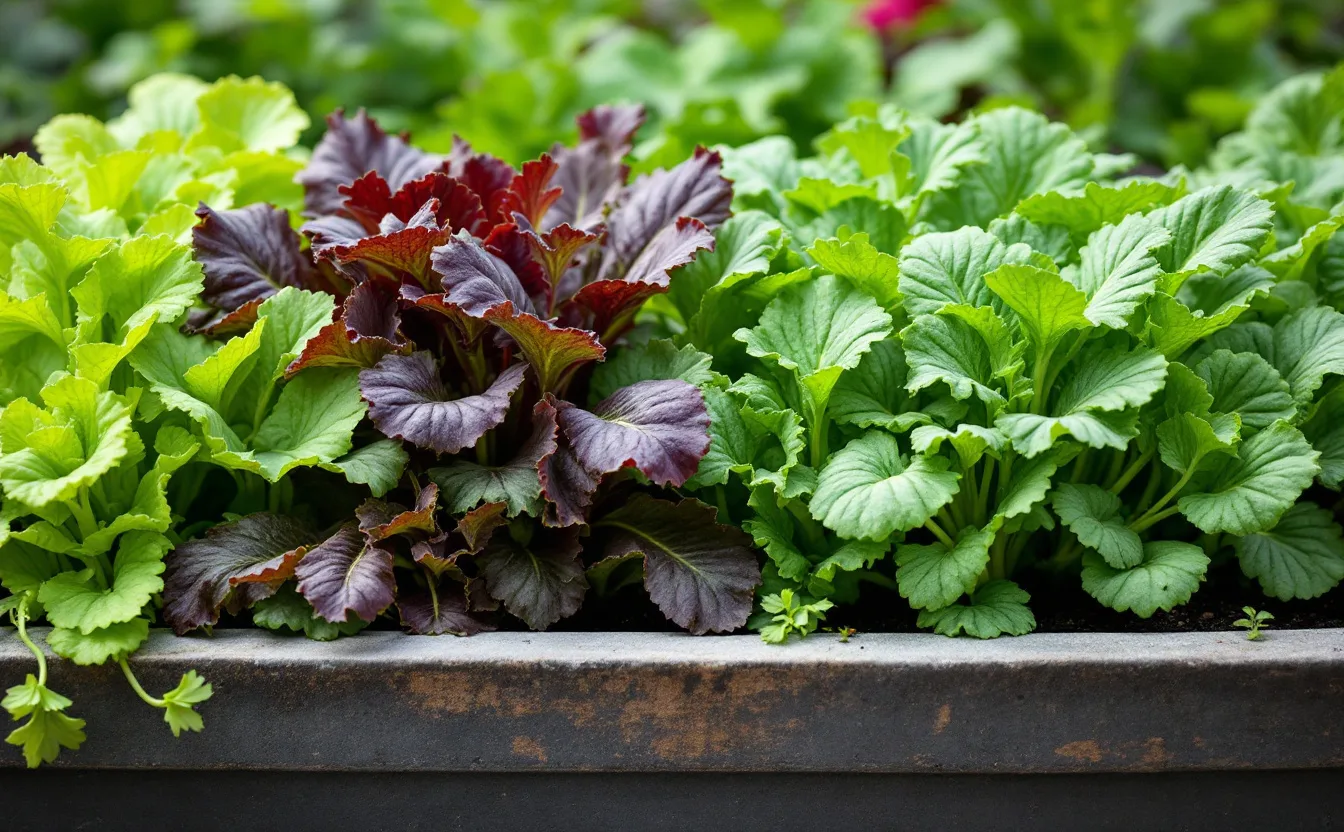
Choose crops you enjoy at the intended stage. Mustard leaves can be more assertive than mild lettuce, and chicory has its own bitterness and texture. A colourful mixture is not automatically a mixture your household will use. See the Gai Choi reference and Catalogna reference for crop context.
Separate baby-leaf and head plans
A dense baby-leaf sowing is intended to be harvested young. It should not be left indefinitely with the expectation that every plant will become a full-sized head. If mature heads are the goal, use the variety's recommended spacing and thin or transplant appropriately.
Label the intended harvest method. It may seem obvious at sowing, but several weeks later a dense patch can look like a mistake rather than a deliberate baby-leaf crop. A note helps you harvest at the right stage rather than waiting for plants to become something the spacing will not allow.
Avoid treating all leafy vegetables as interchangeable. Some tolerate repeated picking better than others, and varieties differ. Read crop-specific guidance and the packet. A method that works for a loose-leaf lettuce may not suit a heading form or a particular chicory.
Choose for the job
A few useful features to look for before buying.
Weather-resistant plant labels
Enough writing room for variety and sowing date matters more than decoration.
Read the buying checklist →Deep, reusable seed modules
Look for firm walls, open drainage and a tray that fits your shelf. Small cells need earlier potting on.
Read the buying checklist →Give the seedbed attention
Small seeds benefit from a prepared surface that allows good contact with moisture without being buried beneath large clods. Remove competing weeds before sowing. If using containers, choose a medium suitable for the crop and a depth that supports the intended growth.
Moisten the bed or medium appropriately and sow at the recommended depth. A heavy stream of water can move fine seed into clumps, leaving uneven patches. Use a gentle method that wets without washing the surface away.
Mark the row or area clearly. If germination is uneven, the original boundaries help you see whether the problem follows shade, dryness or another condition. Without that record, it is easy to attribute every gap to the seed when the bed itself varied.
Let conditions set the interval
Succession sowing does not have to mean repeating a fixed interval throughout the year. Growth changes with temperature, day length, moisture and crop. Two sowings made the same number of days apart may mature close together in one period and far apart in another.
Use the current crop as evidence. When it begins providing useful leaves, assess how quickly you are harvesting and how much remains. Make the next sowing based on that observation and the likely conditions ahead. Keep a small buffer rather than trying to predict every meal precisely.
A notebook can be very simple: sowing date, first harvest, last useful harvest and one sentence about quality. Over a season, those four entries reveal more about your garden than a rigid calendar copied from a different climate.
Watch heat and bolting
Many familiar salad crops respond to seasonal conditions by moving toward flowering. Heat, long days or other stresses can affect the timing, depending on the species and variety. Once the crop's eating quality declines, leaving it in place may not be the best use of a small bed.
Choose varieties and sowing windows suited to your region. Shade or protection can alter conditions, but it is not a universal cure for a crop planted outside its useful season. A warm-season leafy crop may fit better than forcing a cool-season crop through unsuitable weather.
Do not interpret every bitter leaf as evidence of a single management error. Some crops are naturally bitter, and maturity matters. Taste and texture should be evaluated in the context of the plant you intended to grow, not against the expectation that every leaf will resemble mild supermarket lettuce.
Keep moisture reasonably even
A shallow sowing layer can dry quickly, especially in a container or exposed bed. Check it during germination and the early seedling stage. Once roots develop, the relevant moisture depth changes, so continue observing rather than keeping the same surface-only routine forever.
Avoid repeatedly flooding the bed to compensate for long dry intervals. The aim is a workable root environment, not alternating extremes. Check drainage and adjust the method if water ponds or runs off without soaking into the intended area.
Containers need particular attention because their root volume is limited. Grouping similar pots can make care easier, but do not assume every pot in the group dries at the same rate. The container watering guide explains how exposure and material affect the routine.
Harvest cleanly and leave a useful plant
Use the method appropriate to the crop and intended regrowth. For repeated leaf harvests, avoid damaging the growing point where the method requires it to remain. A crop grown for a whole head has a different harvest endpoint.
Keep hands, tools and harvest containers clean. Do not place ready-to-eat leaves in a bucket that recently held dirty tools or garden chemicals. Wash and handle produce according to food-safety guidance before eating it; an attractive garden appearance does not make a leaf ready for the table.
Harvest amounts you can use promptly. A steadier sowing plan is useful partly because it reduces the pressure to pick too much at once. If you regularly waste leaves, reduce the next sowing rather than interpreting abundance as success by itself.
Inspect for pests without losing perspective
Look at the crop regularly, including the underside of leaves and the edge of the patch. Identify the pest or damage before deciding on a response. A few holes and a rapidly expanding infestation are different situations.
Physical protection may help with some pests, but it must fit the crop, conditions and target. A cover that excludes one insect can also change ventilation and temperature. Secure it appropriately and inspect underneath rather than assuming that covering the bed ends the work.
If a treatment is considered, follow the product label and local requirements for edible crops, including any harvest interval. Do not copy an ornamental-plant treatment onto salad leaves. When the identification is uncertain, ask a local extension service for help with clear photographs and growing details.
Make the next sowing a deliberate change
After a batch finishes, decide what to repeat and what to alter. If the crop matured faster than you could use it, sow less. If it failed in a hot period, reconsider the season or crop rather than simply sowing a larger quantity of the same seed.
Change one or two factors at a time where possible. A different variety, location, spacing and watering method all changed together make the result difficult to interpret. Small trials let you learn without risking the whole supply.
Use the cleared space purposefully. It may take another leafy crop, a different vegetable or a period of preparation. A small garden benefits from a plan, but it also needs flexibility when weather or your own schedule changes.
A simple example to adapt
Imagine one short row intended for baby leaves and a separate small group intended for mature heads. Label them differently and record first harvest from each. Sow another short row only when you can see how quickly the first is being used. This keeps the method tied to actual meals.
The example deliberately avoids a universal area or seed quantity. A household's appetite, climate and variety are too variable for one fixed prescription. Start small, observe and scale the useful result. That is a more reliable way to build a steady harvest than filling every available space on the first day.
Sources and further reading
University of Minnesota Extension's vegetable planting guidance explains planning and repeat sowings. RHS chicory guidance distinguishes crop forms and harvest approaches. Use local planting advice and the seed packet for your specific variety. The kitchen garden links to related crop references.
Keep it simple
A few useful features to look for before buying.
Weather-resistant plant labels
Enough writing room for variety and sowing date matters more than decoration.
Read the buying checklist →Deep, reusable seed modules
Look for firm walls, open drainage and a tray that fits your shelf. Small cells need earlier potting on.
Read the buying checklist →