Choose for the job
A few useful features to look for before buying.
A watering can with a fine rose
A removable rose makes cleaning easier. A gentle pattern disturbs small seeds less.
Read the buying checklist →Deep, reusable seed modules
Look for firm walls, open drainage and a tray that fits your shelf. Small cells need earlier potting on.
Read the buying checklist →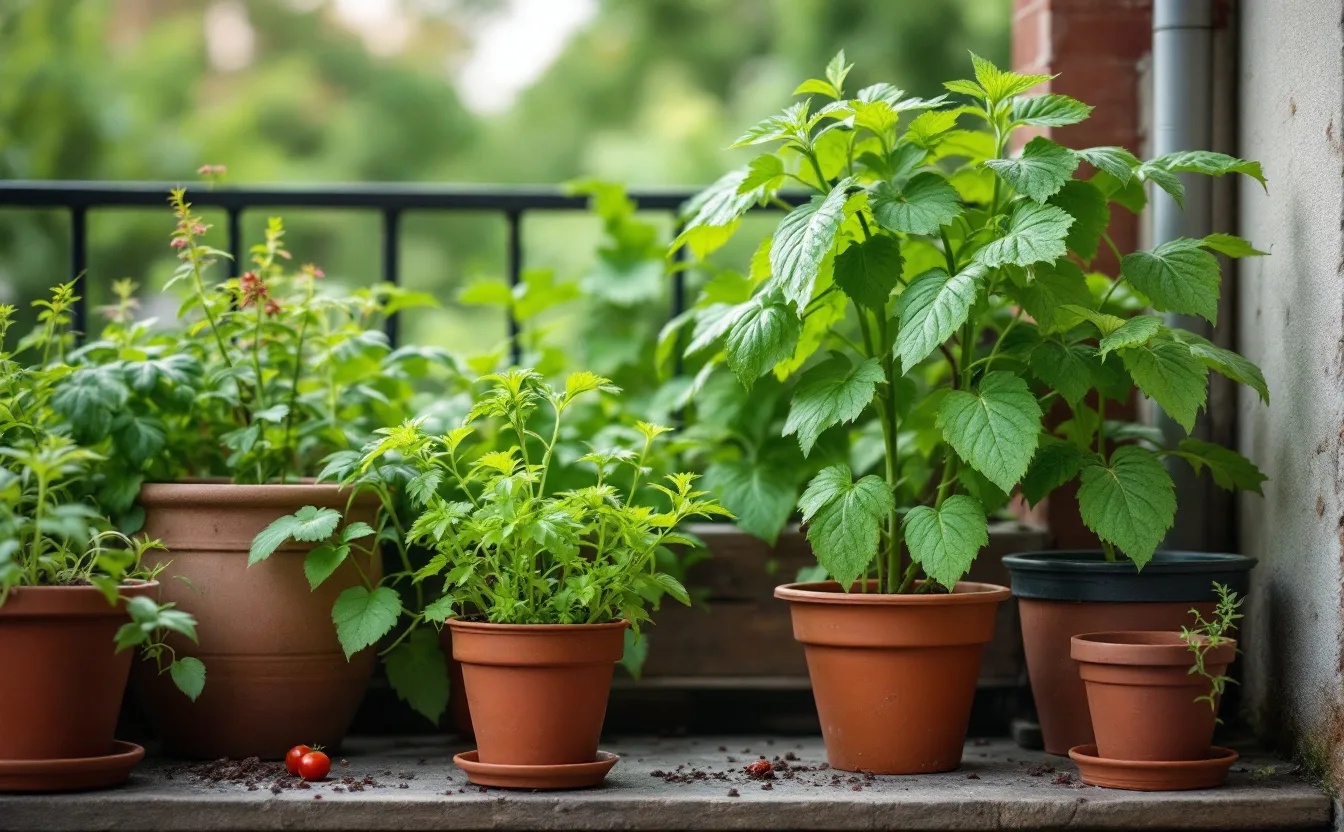
A container garden is often described as an easy answer to limited space. It can be, but pots make the growing environment smaller and more dependent on you. Roots cannot explore beyond the container to find another pocket of moisture. The best plan begins with how you will water, not with how many attractive pots fit along the railing.
Start with a few containers that you can reach comfortably. Learn how they behave in the actual position before expanding. This guide explains selection criteria and a planning method; it does not rank products or claim that particular pots have been tested here.
Observe the place before choosing the crop
Watch the growing area at several times of day. A balcony that looks bright in the morning may be shaded for the rest of the day. A wall can reflect heat, and a roof can block rainfall even when nearby ground is wet. Wind exposure may be more important than you expected.
Record direct sun, shelter and access to water. Notice where a full watering can can be placed safely and whether carrying it requires moving around furniture. If the route is awkward now, it will be worse when plants spread into it. Keep paths clear and avoid arrangements that require reaching over a railing.
On balconies and raised structures, consider weight before filling large pots. Wet growing medium, containers and water add substantial load. Obtain appropriate advice about structural limits rather than using a generic online rule. Position and secure containers so they cannot fall or create a hazard below.
Plan for the mature plant
A small transplant is a poor guide to the volume and stability its mature form will need. Look up the crop's expected size and habit. A compact variety and a vigorous climbing variety can have very different demands even when they are sold under the same broad crop name.
Consider roots, leaves and supports together. A narrow pot may hold the initial root ball but become unstable when a tall plant catches wind. Supports need secure placement, and they should not rely on fragile stems to keep the structure upright.
For a first season, choose a small number of crops you regularly use. A container of herbs near the kitchen may deliver more value than an ambitious collection that is difficult to maintain. Read the crop directory for the difference between crop groups, then check the particular variety's instructions.
Drainage is part of the design
A growing container needs a way for surplus water to leave. Check the drainage openings and the surface on which the pot will stand. A hole is less useful if it is sealed against a flat surface or blocked by accumulated debris.
A decorative outer pot can catch runoff, but standing water around the growing pot needs attention. Do not assume that a hidden inner pot drains freely simply because you cannot see the water. Lift it periodically and inspect the arrangement.
Avoid treating a layer of stones as a universal fix for poor drainage. The choice of growing medium, container geometry and functioning openings matters. If a container lacks a workable drainage arrangement, use it for a different purpose or follow a design specifically intended for that form of growing.
Choose a suitable growing medium
Containers need a medium that balances moisture retention, aeration and support. Ordinary garden soil can behave differently when confined in a pot, becoming dense or poorly drained. Select a product intended for the use and read the information about its nutrient content and recommended management.
A peat-free label describes an ingredient choice, not a guarantee that every blend behaves identically. Coir, composted bark and other components can influence watering and structure. Follow the supplier's directions and observe the actual pot rather than carrying over an old watering routine unchanged.
Moisten and settle the medium appropriately when planting, leaving space below the rim for watering. Do not compact it into a hard mass. Keep the plant at the depth appropriate to the crop; tomatoes are a special case in some methods, not a reason to bury every transplant deeply.
Learn the pot's wet and dry signals
A fixed daily volume is a convenient idea but a poor universal rule. Water use changes with plant size, weather, pot material, exposure and the medium. A small seedling in cool weather does not need the same treatment as a large fruiting plant in a windy warm spell.
Check below the surface and learn the container's weight when practical. The top can look dry while the lower root zone remains moist. Conversely, a brief shower can wet the surface without providing enough water throughout the pot. Observe the whole system rather than one visual cue.
Water in a way that reaches the root zone and allows appropriate drainage. If water runs rapidly down the edge of a very dry pot, the medium may not be wetting evenly. Re-moisten carefully and review why it became so dry. Repeatedly alternating between extremes is harder to manage than maintaining a workable range.
Match the container to your routine
Larger containers can provide more buffering than very small ones, but they also cost more to fill and become harder to move. A small pot might be suitable for a modest herb while being a poor choice for a vigorous fruiting plant. Size is a relationship, not a quality score.
Porous materials can lose water through their walls. Dark containers in strong sun may warm differently from lighter ones. Fabric pots have their own handling and drying characteristics. Compare these features in relation to your location rather than declaring one material best for every garden.
If you are away frequently, be realistic about who will check the plants. A reservoir system or irrigation arrangement still requires correct setup, inspection and maintenance. Test it while you are home. Do not discover a blocked outlet or an empty reservoir after the plants have spent a week unattended.
Keep feeding separate from watering diagnosis
A pale or slow-growing plant is not automatically asking for fertilizer. Water stress, root restriction, temperature and light can produce similar concerns. Check the growing conditions before adding another input.
Container media may include a starter nutrient charge or a longer-lasting fertilizer. Read the bag and the plant-feeding product so you do not unknowingly double up. Follow the crop-appropriate instructions and measure rather than guessing a stronger mixture will work faster.
Keep fertilizers and other garden products stored safely, away from food and children. Label any dedicated measuring equipment. The practical goal is repeatable care, not maximum intervention. If a plant remains unwell, use a locally relevant plant-health service rather than cycling through products without a diagnosis.
Make harvest access part of the layout
Put frequently picked herbs and salad leaves where you can reach them easily. A harvest that requires moving three heavy pots tends to happen less often. Leave room to inspect the underside of leaves and remove damaged material without brushing every plant against its neighbour.
For climbing crops, consider where fruits will hang and how you will reach them. A support that is accessible when bare can become a barrier later. Keep it within safe reach and avoid climbing on furniture or leaning out to harvest.
Arrange pots so one crop does not unintentionally shade another as it matures. You can move small containers, but large ones may become effectively permanent once planted. The mature layout should be the plan from the start, not a surprise to solve in midsummer.
A modest first-season comparison
Choose two or three containers with clear purposes. For example, one for a frequently used herb, one for a compact salad crop and one for a single appropriately sized fruiting plant. This is an illustrative planning approach, not a universal crop list. Your light and climate determine which plants fit.
Keep a short record of watering frequency during different weather, the ease of harvesting and any stability or drainage problem. Note whether you enjoyed using the crop. A plant can grow successfully and still be the wrong choice if you never want to harvest it.
At season's end, clean reusable pots, inspect them for damage and decide what to repeat. Expand the arrangement that worked rather than replacing it with a completely new system. A container garden becomes easier when each season leaves you with better information about that particular place.
Continue the plan
Use the seed planner for crops you intend to start indoors, and the potting bench to compare equipment features. The kitchen-garden hub provides crop-specific starting points.
For further reading, see University of Maryland Extension's container gardening guidance. It explains general principles. Local structural, water-use and plant-health questions require local information, and a merchant's capacity claim should always be checked against actual dimensions.
Keep it simple
A few useful features to look for before buying.
A watering can with a fine rose
A removable rose makes cleaning easier. A gentle pattern disturbs small seeds less.
Read the buying checklist →Deep, reusable seed modules
Look for firm walls, open drainage and a tray that fits your shelf. Small cells need earlier potting on.
Read the buying checklist →